The Force of Capital: Opportunity Cost
Table of Contents
The Effort Theory of Value revealed that it is the passion or interest of a person that drives his industry and prompts him to get the skills and abilities to realize that interest.
This same passion pushes us to use our capital or skills, abilities, and assets to produce value for others, otherwise we feel a sense of waste or regret.
In Economics, this manifests as the opportunity cost which is defined as the potential forgone profit from a missed opportunity.

It necessarily leads to the concept of the time value of money which says that a sum of money is worth more now than the same sum will be at a future date, due to its earnings potential in the interim.
This makes us use our money or assets or skills in the way that will create the most impact either by quality or quantity.
We call this tendency to use our capital for society in the fastest time possible, as the force of capital.
- The more capital that you have, the more pressure to use it and to use it for more people.
In all countries where there is tolerable security, every man will try to use his stock in procuring present enjoyment or future profit..
A man must be crazy to not employ all his stock, whether borrowed or not if there is tolerable security.
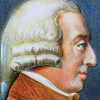
Adam Smith
Wealth of Nations Book 2, Chapter 1
This commonly is seen in:
- the banking and finance industry where deposits and funds must be used quickly in the most profitable way.
- capital intensive industries getting investments to mass produce products quickly
In everyday life, this manifests as:
- people with a lot of money lending it out to their friends
- beautiful or handsome people entering show business where they will be exposed to public who will then appreciate their beauty
- a landowner opening up his house or land to be leased by strangers
- a topnotcher graduate at school choosing to work for the most famous companies instead of ordinary ones
Quality and Quantity
The Force of Capital depends on 2 components:
- The quality of capital
For example, an extremely strong and beautiful voice is better for a singer than a voice that is merely strong.
- The quantity of capital
A singer that has a beautiful voice, beautiful face, and beautiful personality has more capital than a singer than one that only has a beautiful voice
This is similar to physical forces having strength and amount. For example, voltage is the strength or quality, amps is the volume or quantity.
The Force of Capital
Our definition of capital as anything that creates value means that capital has ’economic potential energy'.
This energy has to be used, otherwise the whole capital will be useless.
For example:
- owning a huge tract of land will give a lot of economic potential energy to its owner. This will drive him to use his land in order to utilize that energy
- money in the bank will not give revenue to the bank unless it charges a deposit fee. The bank must lend it to others for interest revenue
- a woman with a beautiful face will not give value if she were always at home away from the eyes of people. She can get revenue by being a commercial model
This potential energy is the force of capital. The bigger or more valuable the capital, the more energy it has, and therefore more force.
The misuse or non-use of this force leads to imbalances that manifests as inflation, unemployment, scarcity (or overproduction), etc.