The Christlike Life Of Lahiri Mahasaya
Table of Contents
I think that John the Baptist was, in past lives, the guru of Christ.
There are numerous passages in the Bible which infer that John and Jesus in their last incarnations were, respectively, Elijah and his disciple Elisha.
The eternal bond of guru and disciple that existed between John and Jesus was present also for Babaji and Lahiri Mahasaya.
In his 33rd year, Lahiri Masaya was accepted by Babaji to be his disciple.
Then, after their brief meeting near Ranikhet, Babaji banished Lahiri from the little mountain group, releasing him for an outward world mission.
A great spiritual renaissance began to flow from a remote corner of Benares.
Slowly, from every part of India, the devotee-bees sought the divine nectar of the liberated master Lahiri Mahasaya.
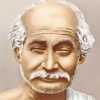
The English office superintendent was one of the first to notice a strange transcendental change in his employee, whom he endearingly called “Ecstatic Babu.”
Sir, you seem sad. What is the trouble?
My wife in England is critically ill. I am torn by anxiety.

I shall get you some word about her.
Lahiri Mahasaya left the room and sat for a short time in a secluded spot.
On his return he smiled consolingly.
Your wife is improving; she is now writing you a letter.
The omniscient yogi quoted some parts of the missive.
Ecstatic Babu, I already know that you are no ordinary man. Yet I am unable to believe that, at will, you can banish time and space!
The promised letter finally arrived. The astounded superintendent found that it contained not only the good news of his wife’s recovery, but also the same phrases which, weeks earlier, Lahiri Mahasaya had repeated.
The wife came to India some months later. She visited the office, where Lahiri Mahasaya was quietly sitting at his desk. The woman approached him reverently.
Sir, it was your form, haloed in glorious light, that I beheld months ago by my sickbed in London. At that moment I was completely healed! Soon after, I was able to undertake the long ocean voyage to India.

Day after day, one or two devotees besought the sublime guru for Kriya initiation.
In addition to these spiritual, business, and family duties, he was into education.
He:
- organized many study groups
- was active in the growth of a large high school in the Bengalitola section of Benares.
His regular discourses on the scriptures came to be called his “Gita Assembly” eagerly attended by many truth-seekers.
By these manifold activities, Lahiri Mahasaya sought to answer the common challenge: “After performing one’s business and social duties, where is the time for devotional meditation?”
The harmoniously balanced life of the great householder-guru became the silent inspiration of thousands of questioning hearts.
Earning only a modest salary, thrifty, unostentatious, accessible to all, the master carried on naturally and happily in the path of worldly life.
He showed reverence to all men, irrespective of their differing merits.
When his devotees saluted him, he bowed in turn to them.
With a childlike humility, he often touched the feet of others, but seldom allowed them to pay him similar honor.
A significant feature of Lahiri Mahasaya’s life was his gift of Kriya initiation to those of every faith.
Not Hindus only, but Moslems and Christians were among his foremost disciples.
Monists and dualists, those of all faiths or of no established faith, were impartially received and instructed by the universal guru. One of his highly advanced chelas was Abdul Gufoor Khan, a Muslim.
It shows great courage on the part of Lahiri Mahasaya that, although a high-caste Brahmin, he tried his utmost to dissolve the rigid caste bigotry of his time.
Those from every walk of life found shelter under the master’s omnipresent wings. Like all God-inspired prophets, Lahiri Mahasaya gave new hope to the outcastes and down-trodden of society.
“Always remember that you belong to no one, and no one belongs to you. Reflect that some day you will suddenly have to leave everything in this world-so make the acquaintanceship of God now,” the great guru told his disciples.
“Prepare yourself for the coming astral journey of death by daily riding in the balloon of God-perception. Through delusion you are perceiving yourself as a bundle of flesh and bones, which at best is a nest of troubles. 35-12 Meditate unceasingly, that you may quickly behold yourself as the Infinite Essence, free from every form of misery. Cease being a prisoner of the body; using the secret key of Kriya, learn to escape into Spirit.”
The great guru encouraged his various students to adhere to the good traditional discipline of their own faith. Stressing the all-inclusive nature of Kriya as a practical technique of liberation, Lahiri Mahasaya then gave his chelas liberty to express their lives in conformance with environment and up bringing.
“A Moslem should perform his namaj 35-13 worship 4 times daily. “Four times daily a Hindu should sit in meditation. A Christian should go down on his knees four times daily, praying to God and then reading the Bible.”
With wise discernment the guru guided his followers into the paths of Bhakti (devotion), Karma (action), Jnana (wisdom), or Raja (royal or complete) Yogas, according to each man’s natural tendencies.
The master, who was slow to give his permission to devotees wishing to enter the formal path of monkhood, always cautioned them to first reflect well on the austerities of the monastic life.
He taught his disciples to avoid theoretical discussion of the scriptures.
“He only is wise who devotes himself to realizing, not reading only, the ancient revelations,” he said.
“Solve all your problems through meditation. 35-14 Exchange unprofitable religious speculations for actual God-contact. Clear your mind of dogmatic theological debris; let in the fresh, healing waters of direct perception. Attune yourself to the active inner Guidance; the Divine Voice has the answer to every dilemma of life. Though man’s ingenuity for getting himself into trouble appears to be endless, the Infinite Succor is no less resourceful.”