
Menu
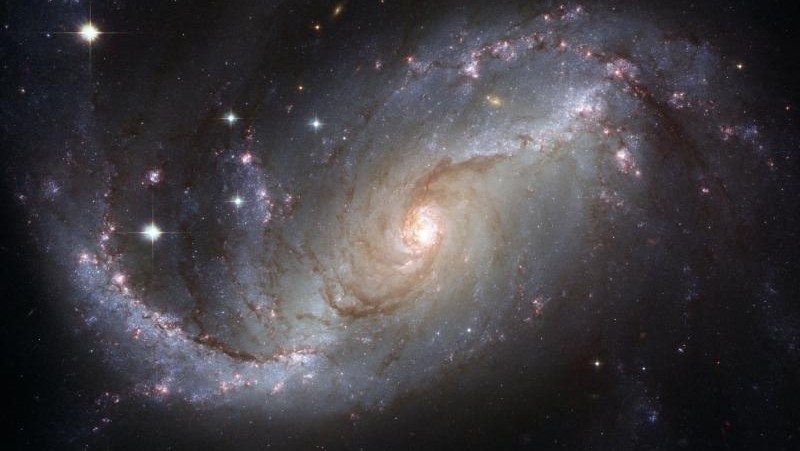
Chapter 4 explained that the main substance of the Spatial layer is the rotating vortex commonly known as black holes or quasars.
These black holes are made up of quanta called quanta of spacetime (qos) as invisible space particles. These are the 2nd Element in Cartesian Physics.
| qos | Examples |
|---|---|
| Galactic | Galaxies and Quasars |
| Stellar | Stars |
| Planetary | Planets |
- The gaps between qos manifest as the Planck length.
- The change between them are Planck time.

Properties of Qos
Like the aethereal layer, the spatial layer above the radiant layer which facilitates sight and touch. This is why qoss are not visible nor tangible.
Unlike the matter of the Material Layer, qoss are easily divisible, giving them fluid and wave-properties.
People attribute fluidity to the heavens.. All fluids do not resist the motions of other bodies only when the fluids are themselves are also in motion.

Both qos and mos are made up of 4 aether particles that are flat, except for aetherspace particles which are linear and not flat.
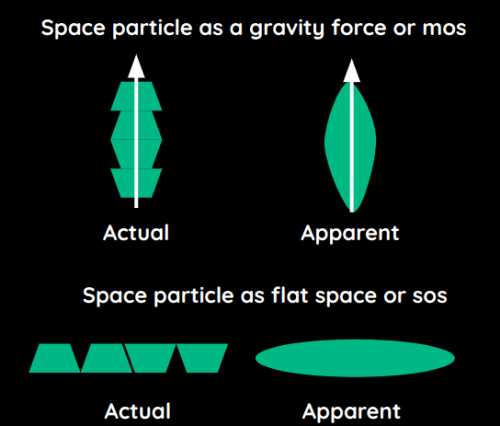
Since there is nothing static in the spatial layer, then a most3 (gravity) can convert to qoss and vice versa.
All that is needed is an external cause, whether a disturbance from:
- the aether that forms a vortex, or
- matter that displaces contiguous space particles
Detection of Qos
The properties of qos are detected through the reaction of the lower layers to it. This can be done through passive observation.
For example, we know that there is a black hole (spatial vortex) in the center of our galaxy because of how the visible radiant stars go around it.
- Here, the Radiant Layer exposes a stellar qos of the Spatial Layer
Likewise, you see the space between you and the desk because of the existence of your material body and the material desk.
- Here, the Material Layer exposes the qos around you.
Another example is the rotation of material objects around their axis, like a top or gyroscope. This makes it seem to defy gravity by standing upright.
Leave a Comment
Thank you for your comment!
It will appear after review.